



Share
Beyond Old Tourism: Why Luxury and Longevity Will Define the New Sustainable Tourism Paradigm
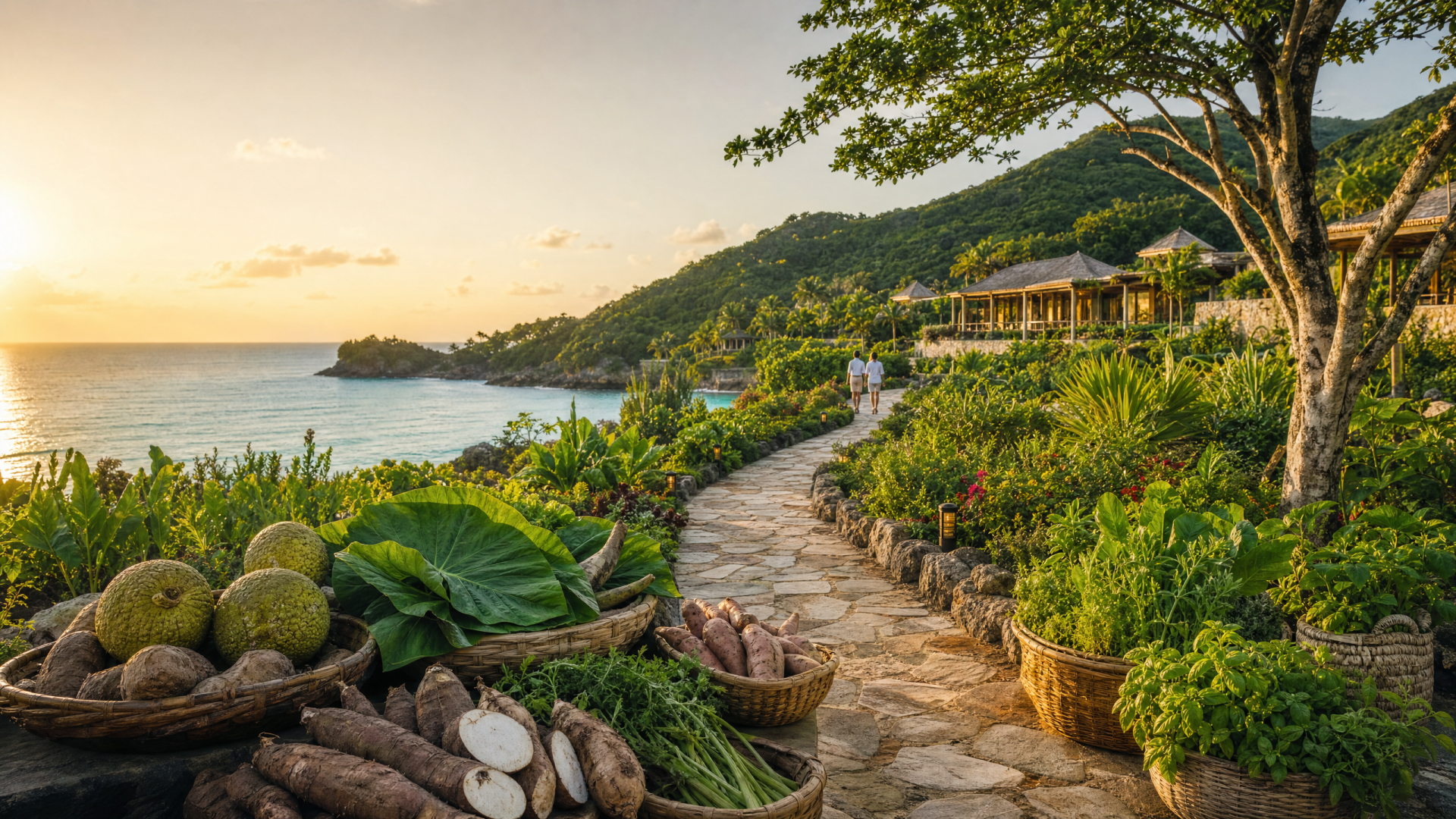
Longevity tourism is an emerging model of sustainable luxury tourism in which travellers seek healthier, longer, more purposeful lives through local food, natural movement, cultural connection, rest, and community-based experiences. For small island states, it offers a practical alternative to extractive mass tourism because it aligns guest wellbeing with local agriculture, elder knowledge, cultural preservation, climate resilience, and higher-value visitor spending.
A quiet revolution is underway
For decades, the world of luxury tourism spoke a predictable language. Private pools. Michelin-starred chefs. Egyptian cotton sheets. Champagne delivered to sun loungers. The message was consistent: luxury meant more. More space. More service. More indulgence.
But something has shifted. The traveller who once demanded more now asks a different set of questions: Will this trip leave me healthier than when I arrived? Is this food actually good for me, not merely delicious? Will I remember this experience in ten years, or will it blur into the last five luxury trips?
This is not a rejection of luxury. It is a redefinition of it. After more than three decades studying tourism, advising small island states, and watching markets evolve across the Caribbean, the Pacific, the Indian Ocean, and beyond, I am convinced of one central truth: longevity is the new luxury.
The Global Wellness Institute defines wellness tourism as travel associated with maintaining or enhancing personal wellbeing and reports that wellness tourism expenditure reached US$894 billion in 2024.[1] Yet the next frontier goes further than wellness. It is not only about rest, pampering, or a temporary escape from work. It is about healthy time, measurable vitality, and a life that feels more purposeful after travel than before it.
This is the New Trinity: Longevity, Luxury, and Sustainability. Three ideas. One inseparable future.
Old luxury extracted. New luxury regenerates.
To understand where tourism is going, we must first understand where it has been. Old luxury was built on material excess. It sold square footage, imported food, bottle price, thread count, and exclusivity. It often treated the destination as a backdrop rather than a living system.
| Dimension | Old Luxury: The Extraction Model | New Luxury: The Regenerative Model |
|---|---|---|
| Core promise | You deserve more | You deserve to thrive, and so does this place |
| Main metric | Material indulgence | Health, meaning, transformation, and local value |
| Food model | Imported, branded, often processed | Local, traditional, bioactive, seasonal, and traceable |
| Guest outcome | Temporary pleasure | Leaving healthier, calmer, and more connected |
| Local impact | Leakage and low local ownership | Farmer linkages, elder employment, cultural continuity |
| Sustainability | An add-on or compliance requirement | Built into the value proposition |
Old luxury said, “You deserve this. Take it.” New luxury says, “You deserve to thrive. And so does this place.”
The difference is profound. In the first model, the guest takes and the destination gives. In the second, the guest receives health, wisdom, and renewal, while the destination receives investment, respect, and strengthened local systems. This is not merely a marketing shift. It is an economic development strategy.
Why is longevity the new luxury?
Luxury has always been about access to what is rare, difficult to obtain, and deeply desired. In the past, rarity meant a five-star suite, a first-class ticket, a private beach, or an imported vintage wine. Today, those things are easier to buy than ever. Private villas can be booked online. Fine sheets are sold in department stores. Champagne is available in almost every capital city.
What remains rare? Time, health, peace, purpose, and belonging.
The wealthy can buy almost anything except healthy years. They can buy a private jet, but not necessarily better sleep. They can buy a tasting menu, but not necessarily lower inflammation. They can buy a luxury residence, but not necessarily a sense of community.
That is why longevity tourism matters. A week spent walking with elders, eating locally grown ground provisions, sleeping to the rhythm of the sea, learning to slow down, and reconnecting with purpose may change a person’s biology, psychology, and trajectory. That is luxury that compounds.
The strongest longevity research reminds us that ageing well is not determined by one product, one supplement, or one clinical intervention. Studies of long-lived communities often point toward lifestyle patterns such as natural movement, plant-forward diets, purpose, social belonging, family ties, and daily routines that reduce stress.[2] These are precisely the assets that many small island societies still possess, though too often they are undervalued by the tourism industry itself.
What small islands already have is what the world is searching for
Small island states do not need to imitate the medicalised luxury wellness industry. They do not need to build expensive biohacking centres before they can compete. They already possess many of the raw ingredients of longevity tourism: living soil, traditional foods, coastal landscapes, natural movement, slower rhythms, community cohesion, cultural memory, and elders who embody successful ageing.
Traditional diets across the Caribbean, Pacific, and Indian Ocean include root crops and ground provisions such as cassava, yam, taro, sweet potato, and breadfruit. Scientific reviews describe roots and tubers as important sources of dietary energy, fibre, vitamin C, potassium, carotenoids, phenolic compounds, and other bioactive constituents, with potential antioxidant, hypoglycaemic, hypocholesterolaemic, antimicrobial, and immunomodulatory effects.[3]
| Traditional asset | Why it matters for longevity tourism | Tourism implication |
|---|---|---|
| Ground provisions | Local root crops offer fibre, resistant starch, micronutrients, and cultural identity | Menus can move from imported indulgence to local vitality |
| Elders | Centenarians and near-centenarians carry practical knowledge about food, faith, movement, land, and resilience | Experiences must compensate elders fairly and protect dignity |
| Island time | A slower pace supports rest, reflection, and stress reduction | Destinations can market recovery and rhythm, not only attractions |
| Community cohesion | Social belonging is central to wellbeing and healthy ageing | Tourism design should build respectful host-guest connection |
| Biodiversity and land | Nature-based experiences can support health and conservation | Guests can plant, harvest, walk, learn, and give back |
The point is not to romanticise poverty or pretend that all traditional lifestyles are easy. The point is to recognise that what industrial societies have lost, small islands may still hold. The tourism question is whether these assets will be protected, valued, and ethically shared, or whether they will remain invisible while destinations continue importing the symbols of old luxury.
Longevity tourism is not the same as wellness tourism
Wellness tourism has opened an important door. It has shown that travellers increasingly want health, prevention, restoration, and self-care when they travel. A 2023 review of wellness tourism research identified four broad dimensions of potential health benefits: physical fitness, psychological fitness, quality of life, and environmental health.[4]
Longevity tourism, however, should be understood as a more strategic and place-based model. It is not a massage followed by a cocktail. It is not a generic retreat that could happen anywhere. It is a destination system that asks: how can this place help visitors live better while helping local people, culture, and ecosystems thrive?
| Wellness Tourism | Longevity Tourism |
|---|---|
| Often focused on relaxation and pampering | Focused on healthier, longer, more purposeful living |
| May be disconnected from local culture | Deeply embedded in local food, elders, land, and traditions |
| Often designed as a service add-on | Designed as a destination development model |
| Guest may return rested | Guest should return changed |
| Sustainability may be optional | Sustainability is central to the product |
This distinction matters because small islands cannot win by copying the most capital-intensive wellness destinations. They win by being more authentic, more rooted, more scientifically credible, and more community-centred.
How does longevity deliver sustainability?
Many people still assume that luxury and sustainability are in tension. They imagine sustainable tourism as less comfortable, less profitable, or less desirable. That is a false choice. When luxury is redefined as longevity, sustainability becomes part of the value itself.
UN Tourism notes that Small Island Developing States rely heavily on tourism export revenues, with around 38% of export revenues in SIDS in 2023, excluding Singapore, coming from international tourism, and up to 85% in some destinations.[5] Yet it also warns that direct GDP from tourism in SIDS ranges from only 0.7% to 15.2%, reflecting the problem of economic leakage.[5] This is the contradiction small islands must solve: tourism can bring visitors and foreign exchange while too much value still escapes through imports, external ownership, and weak local linkages.
Longevity tourism directly addresses this weakness because it makes local linkages part of the guest promise. Local food is not a cost-saving measure; it is the health product. Elder knowledge is not entertainment; it is the wisdom product. Walking, gardening, harvesting, cooking, storytelling, and rest are not low-value activities; they are the core of the transformation.
| Feature of longevity tourism | Sustainability effect |
|---|---|
| Longer stays of 14 to 21 nights | Fewer arrival turnovers and deeper local spending per trip |
| Local food procurement | Reduced imports, stronger farmer incomes, and better food security |
| Elder-led experiences | Dignified income, cultural preservation, and intergenerational respect |
| Walking, gardening, and natural movement | Lower infrastructure intensity than energy-heavy entertainment |
| Regenerative guest activities | Visitors help restore land, gardens, trails, and community assets |
| Repeat visitation | Relationships replace constant price-driven acquisition |
This is why the New Trinity works. Longevity aligns the interests of the guest, the host, and the land. The guest wants to feel better. The farmer wants a reliable market. The elder wants dignity and respect. The destination wants value retained locally. The environment needs lighter, slower, more regenerative use.
What should hotels, destinations, farmers, and elders do now?
For hotels and accommodations, the first step is to audit the food supply. What percentage of the menu comes from within 50 kilometres? Which traditional crops are being ignored? Which farmers could become strategic partners? The future luxury hotel will not merely list imported wines. It will explain why its dasheen, cassava, yam, herbs, sea moss, cocoa, or breadfruit matter for vitality, memory, sleep, digestion, culture, and place.
For destination managers and tourism ministries, the priority is to move from scattered wellness products to a coordinated longevity cluster. A cluster may include hotels, farms, clinics, chefs, elders, walking guides, cultural practitioners, universities, and community groups. It should include ethical protocols, fair payment standards, optional health assessments, local procurement goals, and measurement systems.
For farmers, longevity tourism creates a new market for traditional crops that have too often been displaced by imports. A root crop is no longer simply a side dish. It becomes a destination asset, a story, a health proposition, and a reason for visitors to choose one island over another.
For elders, the message is simple: you are not old. You are wise. Your knowledge has value. But that value must never be extracted. Ethical longevity tourism must protect elders’ consent, time, privacy, cultural authority, and right to say no.
Leve Global’s work in sustainable tourism, responsible tourism, tourism re-engineering, investment promotion, and digital transformation has long reinforced a central lesson: transformation does not happen through slogans. It requires strategy, governance, local ownership, market intelligence, and implementation discipline. From climate-resilient tourism planning to destination strategy and community-based value creation, the lesson is the same. Sustainable tourism becomes real only when the model rewards the behaviours it claims to value.
The New Tourism Trinity is already here
In Tobago, the Blue Food Festival celebrates dasheen, a traditional root crop with deep cultural resonance. In Jamaica, centenarians remind us that longevity is not only about supplements; it is also about soil, family, faith, food, movement, and purpose. Across the Pacific, taro cultivation sustains both health and cultural identity. Across the Caribbean, the philosophy of livity continues to link self-respect, respect for nature, and community life.
These are not nostalgic fragments. They are strategic signals.
The old luxury said, “Take as much as you can.” The new luxury says, “Thrive, and help this place thrive too.” This is the New Trinity: Longevity. Luxury. Sustainability. One idea. Three pillars. An inseparable future.
The question is not whether this future will arrive. The question is whether small island states will lead it, or be left behind while others package and sell what islands have always known.
I believe small islands can lead. The roots of longevity are already in the soil. The secrets are already in the elders. The future is already in your hands.
References
- Global Wellness Institute, “Wellness Tourism,” https://globalwellnessinstitute.org/what-is-wellness/what-is-wellness-tourism/.
- Dan Buettner and Sam Skemp, “Blue Zones: Lessons From the World’s Longest Lived,” American Journal of Lifestyle Medicine, 2016, https://pmc.ncbi.nlm.nih.gov/articles/PMC6125071/.
- Anoma Chandrasekara and Thamilini Josheph Kumar, “Roots and Tuber Crops as Functional Foods: A Review on Phytochemical Constituents and Their Potential Health Benefits,” International Journal of Food Science, 2016, https://pmc.ncbi.nlm.nih.gov/articles/PMC4834168/.
- Chenmei Liao et al., “Dimensions of the Health Benefits of Wellness Tourism: A Review,” Frontiers in Psychology, 2023, https://pmc.ncbi.nlm.nih.gov/articles/PMC9869067/.
- UN Tourism, “Tourism in Small Island Developing States (SIDS),” https://www.untourism.int/sustainable-development/small-islands-developing-states.
We would love to hear from you. Engage with us. Leave a comment below.
About the Author:
Dr. Auliana Poon
Founder and Managing Director
Leve Global

Dr. Auliana Poon heads Leve-Global. She is a courageous and passionate businesswoman. A trained Economist, Dr. Poon is a management consultant and strategist with a focus on trade and strategy development, competitiveness, climate adaptation, and regenerative economic growth. Dr. Poon led teams that developed innovative economic solutions for over 50 countries around the world including Australia, Barbados, the Bahamas, Iceland, Indonesia, Jamaica, Mauritius, Mozambique, Singapore, Seychelles, South Africa, Swaziland, Switzerland and Zambia.
An experienced researcher and analyst with fiercely independent thought, Dr Poon believes that developing countries cannot continue to compete with natural attributes of Sun, Sand, Sea, Oil and Natural Gas alone. For success and sustainability, more people-centred, culture-oriented, innovation-based, sustainability-directed, technology-focused and talent-driven approaches are needed.
